Saturday, 30 March 2013

Elements of Game Technology, pt 2: Sound For Games

Ever since gaming has made the leap from a static medium to an interactive one, sound has been included as a way to generate moods and reinforce each games identity as a whole, from the beeps and midi tones of Space Invaders and Tetris, all the way up to fully orchestrated epics and vocal arrangements for games such as Halo and Final Fantasy.
Musical arrangements in games have always been used effectively to enhance the mood of the certain level, or situation you are in at the time in the game: From an epic orchestral score to accompany you as you take part in a large scale battle, to the more light hearted and catchy beats used in a puzzle game, practically every genre has been covered in the history of video game music, some more prominent than others. 


Its not only musical scores that have been utilised in video games, but also effects and audio environments that create living worlds, that are both unique and rich in atmosphere. Sounds help create an ambience of a game your investing yourself in, and lends believability to Characters, Vehicles, Creatures and even how inanimate objects sound when interacted with: if a sword you were holding hit off an enemies shield and didn't react in a realistic fashion the effect would be ruined and jarring to the player. With shoot-em-ups a lot of attention to detail is spent on how each gun sounds and feels, with research being done with the real life equivalents to get the effect of using each weapon as authentic as possible, and to distinguish each weapon from each other, to the extent that take on characteristics of their own. On top of a full soundtrack to accompany it, each game in today's generation will have a complete and vast sound library for everything in the game, from gunshots to the creak of a door opening, its all relevant and important to the end product. 
Noises and sounds have a great effect on the player when a game relies heavily on ambience and mood to effect your playing through it.... as an example  games in the survival horror genre have made use of sounds and noises to great effect to disturb and scare the player, even with the absence of any visible danger on the screen. The sound of a distant creak, or something scraping along a metal surface can enhance the scare factor, and plays on peoples ability to let their imagination do the work for them, in filling in the blanks as to what actually makes them scared. 


Video Game composers have risen to prominence in today's industry, with games hiring talent who work across movies and other big budget mediums. U.S Composer Michael Giacchino who worked on the soundtracks for the Medal of Honour game series, has gone on to create scores for the Television show Lost, as well as movies 'The Incredible's  and 'Star trek'. Not only a personal preference of my own, but Japanese composers in particular were the first that seemed to be Lauded for their work in video games with Japan being the first countries to release full game soundtracks as stand alone CD's, as well as host full concerts dedicated to game music. Koichi Sugiyama (Dragon Quest) and Nobuo Uematsu (Final Fantasy) are a few of the key figures in  composing game music, and definitely contributed it to the rise of it in the west. Uematsu himself is often referred to as the 'Father of Video game Music' and has done many world tours, often alongside Grammy award winning composer Arnie Roth. 

Interview With Nobuo Uematsu

My personal key moments in gaming audio:

Sonic The Hedgehog ~ http://www.youtube.com/watch?v=CqOlpQ7sepE
My introduction to games as one of the most awesome mediums i had ever stumbled into.... everything from each stages music, to the tinkle of the rings when you'd collect them, the jumping noise, the 'BWOWMP' of the springs when you jump off them, and the way the music speeds up when you get the shoes that make you faster and obviously the 'invincibility' music.... there's literally so much audibly that these games throws at you, making the whole experience feel even more enjoyable than just the game play. 

There are too many examples of audio from these games that stood out for me, and completed my experience in playing them growing up.... but the fact that all original 151 pokemon had their own individual cries contributed to each one having their own character. The piece I chose there I chose because for a chiptune, it really does convey the creepy and sad town its for.... quite impressive to do in my opinion for a a gameboy game.  

Final Fantasy ~ http://www.youtube.com/watch?v=195QtkOJCYg
A massive influence on me in general, though the music is something that sets the series apart. Nothing captures the sense of a large scale adventure than the music for this series. 

Kingdom Hearts ~http://www.youtube.com/watch?v=gUQuBBBzx-I
Incredibly emotional and impactful, considering its a game series that is apart of the Disney universe. This piece in particular is one of my favourite compositions of all time. 

Chrono Cross ~http://www.youtube.com/watch?v=ROKcr2OTgws
The first game soundtrack i listened in it entirety, and still one of my favourites. Very few other soundtracks evoke such a sense of loneliness, and the surreal nature of other worlds.

Silent Hill 2 ~http://www.youtube.com/watch?v=JozVfR-XavQ
An amazing musical accompaniment to a game that relies heavily on silence (hohoho) and mood setting noises to create ambience and fear in the player so effectively.... the music reflects the haunting nature of the game perfectly.  

Digital Devil Saga 2 ~http://www.youtube.com/watch?v=kM8fizLPZqI
A piece of music from quiet an obscure Japanese RPG, that regardless of weather you've played the game or not gives a great sense of an apocalyptic and prelude to a climactic battle about to take place. The best examples of music are able to set the scene for you, regardless of weather you have the visuals in front of you, and the soundtrack for this game is no exception.

Sunday, 17 March 2013

Yoshitaka Amano

When thinking of what inspires me, its quiet a difficult thing to pin point.... when i think about it there are so many elements and various things that have influenced me and inspired me over the years....
So I had to think about the question more specifically.... what has inspired me, in terms of wanting to be an artist? to focus on games and illustration as a career? hmmmm, I guess looking at it its one artist in particular, and that's Yoshitaka Amano. I've never been one of these people who's been into 'art' as it is, but throughout college I was more into art based stuff than design, despite the fact I was studying graphic design. I know its all connected  but often when I would be set assignments researching graphic designers, id often drift off and look up artists instead... and that's when I began researching Amano's work. He was always someone I was aware of, through his work as a character designer on the Final Fantasy series of games, but wasn't until I looked into his work properly that I realised his scope of work he has done over the course of his career.  
Amano is heavily influenced by both western artists such as Peter Max and Gustav Klimt, and Traditional Japanese Ukiyo-e Woodblock prints, so his work shows a fusion of both these styles in their execution. His earlier work shows his western influences more clearly, the comparison below is his work done for Vampire Hunter D, and the main character in the first picture is an older piece he did, and is very reminiscent of the work by Klimt and the Art Nouveau style with very warm and half tone colours, and even the faces of the characters look very western in their depiction. Working on this character for a long time, has shown how his style has evolved very much into his own unique style, with much more emphasis on wispy lines, and brush strokes which depict characters in minimalistic detail that still somehow remain very in depth. 
Prevalent throughout Amano's work is his focus on the female form, and the various ways it is depicted shows how he uses very refined techniques to create his work. He will often start with fine pencil lines as a basis for the form of his work, then paint or ink over it with various media, though the lines created by his pencil work is often still visible. This might seem messy, but actually is what gives a lot of his work its fluidity and sense of movement  especially when it is something simple like a face, that is perfectly framed by wisps of hair. The faces of his subjects are often incredibly minimalist compared to the rest of the composition, with intense amount of detail put into the surroundings so as to appear to frame the simplicity of the features. 
There is quite a large emphasis on clothing and attire in a lot of Amano's work, showing his understanding of fashion design, and how material fits to the human form. Amano's focus on Fantasy themes means that this is often taken to the extreme, with clothes extending and overlapping to fit across the whole page, forming a sort of surreal wave of patterns with the character surrounded by it. The pattern work on the clothing itself is also often detailed to the extreme, with fabrics often taking on a mysterious quality that forms an extraordinary array of colour and shape. This forms a contrast against the simple and minimalistic forms of the humans he depicts in each piece of work that focuses on a character.  
As well as his own work, Amano has also depicted many other popular figures in his time, the examples of Batman and Darth Vader shown below. These examples I chose specifically, because put side by side they show the varying styles that Amano displays in all of his work; from the wispy lines and gentle shading on the characterisation of Batman, to the thick yet fluid brush strokes in ink used to depict the figure of Vader. Two iconic characters that are instantly recognisable  yet done in Amano's unique way in contrasting media. The style of the fluid brush strokes is one that has influenced me most by Amano, and I have spent many hours trying to attempt the natural flow of the brush with Indian ink to get an effect that can even come remotely close to teh effortlessness depicted in hsi work. 
His ability to experiment in any media and field has led to such a diverse range of work, its almost impossible to cover it all in something like a blog. Shown below though  are a few examples that show his background interests in Pop Art and his early career working as a character designer for an Anime studio. Both of these examples show his ability to step away from the fine detailed work you've seen so far, and focus on the simplicity of his creations, depicted specifically for print or large scale viewing in an art gallery. 
Diversity in Amano's work not only covers what medium he can work in, but also what audience he can make his work appeal to. The artwork below is from a project that was created specifically with a younger audience in mind, what began as a small book illustration project for children has now grown into a full scale animation. I find it very inspirational how he was able to take something lie vegetables and characterise them, building his own world around such a simple idea, and turn it into something so unique. 
Over the course of his career Amano has collaborated with various people, Neil Gaiman (Worked on Sandman), Greg Rucka (Illustrated a Elektra & Wolverine comic written by him) and Japanese Metal band, Galneryus (provided cover art for their albums) amongst others. His ability to depict the characters created by others is one of his greatest strengths and he is able to do so without compromising his own style: each creation is recognisable as his artwork. 
His current project, is something that has been ten years in the making, and is not only an art project but also a story written and created by Amano, called Deva Zan. As well as a published illustrated book (which I will review in full at a later date) the story is currently being turned into a fully animated movie. I cant wait to see how a full motion picture will translate Amano's unique style of artwork, and from the brief clip ive seen it is looking very impressive. 
(teaser trailer fro Deva ZAN movie)


(Amano Interview)

Inspirational Star Wars Illustrations

Its one of those things that has stuck with me since I was as young as I can remember; My earliest memory of watching Star Wars for the first time was sat in front of my TV screen, gazing in wonder at these amazing adventures by these awesome characters as I feverishly tried to replicate an AT AT Walker out of my Lego bricks I had scattered in front of me (this was quite some time before official Star Wars Lego sets were out mind you)... Star Wars has always been one of those franchises that has fuelled my imagination.

Regardless of how this makes me sound like a massive fan-boy (I wear that title proudly when it comes to such things), I think its important to acknowledge those things that have provided influences in your life.
I recently received as a Christmas present an art-book that collects a huge assortment of illustrations from over the many years from the beginning of the Star Wars saga to now, covering all aspects of the franchise: work done for the movies, games, novels, trading cards, toys, it covers everything that falls under the category of 'illustration' from the archives of one of the worlds largest licensing vaults. This book was a revelation; It not only displayed the vast range of varying artwork created, but also brought to my attention various artists and illustrators who I had not known about before... It is these artists I thought id shine the spotlight on in this post. 


Ralph McQuarrie
For those that don't know, Ralph McQuarrie is the legendary concept artist behind not only the concepts for the original trilogy of Star Wars movies but others including, E.T. , Battlestar Galactica and Cocoon amongst many others. It was through his artwork that George Lucas was able to visualise his galaxy, and the characters that dwelled within it. The original Star Wars artist has gone on to be the inspiration for many, if not all of the artists featured on this page. 


 Drew Struzan
Another iconic name in the film industry  Struzan's work is recognisable to nearly everyone even if you don't recognise the name, having produced movie posters for a massive portion of blockbuster's, including; Back to The Future, Star Wars, Indiana Jones, Blade Runner, E.T. The Extra Terrestrial, The Muppets, Harry potter, and Hellboy... and that's just scraping the surface. Like the majority of artists featured on this page, Struzan is a master of traditional media, making use of coloured pencils and acrylics in his many works. 


Hugh Fleming
An Australian artist who has worked on numerous Dark Horse comic book covers, recreating the epic feel of a movie poster by capturing the realistic likenesses of each character in every cover. His work has not only covered the star wars comics that follow the stories of the franchises expanded universe, but also many Indiana Jones covers, as well as numerous independent works. 


Terese Nielsen
An artists who's work has pretty much dominated the world of card games since the early '90's, doing work for Wizards of the coast, most notably contributing artwork for the Magic The Gathering card game series. She has also worked illustrating superheroes for Marvel, Dark Horse and Topps comics, which she fully painted. She has also contributed work to teh World of Warcraft series as well as Star Wars miniatures.... All of her work has an intrinsic focus on characters, of which there is always a strong and dynamic feel to each. 


Jason Palmer
Another artist who began looking up to the likes of Drew Struzan, only to end up in the same industry, working on various Movie posters, DVD covers, comic book covers and collectables for licenses such as Star Wars, Harry Potter and Game of Thrones. His pencil work is incredibly detailed and realistic, and his studies in various characters show his ability in capturing those seen on the big screen.


Jerry Vanderstelt
An illustrator who's focus on the world of Sci Fi and Fantasy has led him to recreate incredibly realistic interpretations of iconic characters from various licensed franchises, including Star Wars and Lord of The Rings. He works with Warner Bros. and New Line Cinema to create various movie artwork, though he has also worked for numerous other companies over the years. 


Randy Martinez
An artist that is incredibly versatile amongst many mediums, he has created cartoons, caricatures, illustrations, paintings and 3D art for Lucasfilm since 1999. His stylisation and sense of humour carries across into many examples of his work, even when utilising detailed paintings... as seen in his 'Sith Rocks' piece above. His ability to depict recognisable characters in his own stylised fashion is what sets his work apart. 


Matt Busch
Has worked in Hollywood since the early nineties, and his work not only covers franchises such as Lord of The Rings, Battlestar Galactica and Night of The Living Dead, but he has also created work for bands such as Foo Fighters, Beastie Boys and Poison. He has dedicated the last few years in reaching out to those who want to learn the trade, by creating various unique drawing tutorials as well as providing insight into the industry. 


Dave Dorman
A renowned artist in the Star Wars world, Dorman is an Eisner award winning illustrator, who's artwork has captured most iconic characters in popular culture over the past 25 years. He is well known for his epic cover art for the Star Wars and Indiana Jones comic book covers by Dark horse comics. 


Dave Seeley
An artist who grabbed my attention not just through the work itself but with how he creates it: Though commonly the combination of traditional media and digital is to start with traditional then polish it into a final piece on computer is how most artists do it, Seeley does it in reverse by creating his images digitally first, then working over them in oil paints after. his influences in sci fi movies, and background in architecture is prevalent in the detailed, and epic compositions he creates. 


Brian Rood
A professional illustrator who has worked across so many fields and for so many clients its difficult to know where to start. He is notable for creating a range of estate artwork based on iconic entertainment figures of the twentieth century, including Ray Charles, Muhammed Ali, Sammy Davis Jr, Frank Sinatra and Richard Pryor to name but a few. He has contributed well over a hundred illustrations to Hasbro's Star Wars toy packaging alone.


Tsuneo Sanda
A Japanese artist, with influences in various western traditional artists, Sanda has concentrated his career on depicting artwork themed around Sci Fi and Space, including work for Star Trek and Star Wars. His work has been featured in book covers, comic book art, prints and even company exclusive work. 


Tommy Lee Edwards
Having an incredibly impressive body of work to his name, Tommy Lee Edwards has created work for comics (X-Men, Daredevil, Batman), licensing style guides for movies (Harry Potter, Men in Black 2, Superman Returns, Batman Begins, and the Star Wars and Indiana Jones properties) as well as video games (Command and Conquer, James Bond and Prey). His work for conceptual and storyboard artists in movies has provided recent work in the Denzel Washington epic 'The Book of Eli', as well as other upcoming projects. 

Friday, 25 January 2013

Feedback ~Visual Design

With my Visual design work, it was mostly a case of getting up to date with the work we had been set so far, which I managed catch up on over the Christmas holidays. Also, with a lot of the work I showed Chris, I had done it all traditionally so with any changes that could be made it was suggested that I do them digitally once I had them scanned in. This is the case with my Abbey Park final shown below:

Even though im not completely done editing it, here is how I've changed it so far: turned the contrast down slightly, by adding darker shades to the piece, mostly to the right corner as this is overly bright in my original painting and shows not much form underneath the light reflection. I've also tried to make more of an emphasis on the bridge centre piece as this is the focal point of my painting. 
This is one of the pieces I did of abbey park leading up to the final, and was my focus on using colour that I am concentrating on this year. It was suggested that to make the object of the bridge closest to the viewpoint, that I make a copy of my original painting and got over it with a fine line pen, to enhance the edges of the solid objects. 
A piece that I completed over Christmas, from the original pencilled line art, I am really pleased with how this came out. I think it is the most accurate use of colour and lighting in a painting I have done so far. The only thing that niggles me about it, is that the shapes of the circular components of the train are not completely accurate, as they were an area I struggled to get right. I will probably try to adjust the front of the train digitally, later on. 
With a lot of the work I did over Christmas, the Leicester sketches I did probably were the best at showing how far I've improved, as I did them in precision fine line pens and permanent media such as these are media in which I tend to do well in. This combined with a watercolour wash, is a technique in which I will focus on for future works, as the end result is one I am very satisfied with. 

These were preliminary sketches done with ink and brush pens for my Bradgate Park work: Probably the least successful pieces I've done so far. My intent was to try and do them as fast as possible, but with the media involved the brush strokes tended to be quite thick and so made it difficult to create definitions between the far and near objects. Probably too stylised from the original images they are trying to capture... still, I enjoyed using the different media. 

Initial sketches done for 'War of The Worlds' project, according to my tutor, the loose lines worked quite well on some of these sketches even though when approached with an open project like this I find it quite hard sometimes to be so loose flowing with my pencil strokes as my head full of ideas, gets in the way of just putting pencil to paper. 
A final painting for my 'War of The Worlds', depicting my 'tripod' design. As a rough painting, it still needs a lot of work and more details adding, which i will most likely do digitally later. 

Overall my visual design has greatly improved, and with more projects that involve freedom im finding that im getting into the flow more, as im having more fun at letting my imagination kick in. One thing that was noticeable was my lack of confidence in pencil, compared to my work with pens, so it was suggested i experiment with various mechanical pencils to try and get an ideal pencil to translate my strokes. I think the next step from here, is to approach painting digitally in the next project, as my work is still focused mainly on traditional, as im stubbornly stuck firmly in that area :p


Feedback ~Game Production

The feedback from my first assessment definitely helped in showing me which areas I need to improve in, though this post I will look at my work in improving my first two Blitz briefs that were both a re-introduction to 3d after the summer holidays and an introduction to implementing our 3d work into a games engine.


With the trash project, the only main issue with my final model was how I hadn't specified the detail on its normal maps.... making certain areas that should have been flat, look embossed on the items (like the printed font and logos on the boxes). I went back into my normal maps, and clone stamped areas that were bumpy, to become 'flat' so that they wouldn't end up looking with an embossed effect on the final object. 


Another issue with my original construction, was that a lot of the geometry of the first and second floors was duplicated without me realising it, which in turn affected the surface values of the building maps (it made them all blurry and distorted to look at). So I went through each face of my buildings and deleted them until they didn't overlap any more. 


This time round I decided to make use of tile-able textures, with some brick textures I took from my photo references to create my texture maps, editing them so they tiled. I made sure the bricks were more darker tones, and had a grimier surface property as my previous texture used seemed to bright and clean compared to the surrounding buildings

. 
Even though I wanted to add a lot more external decoration and derelict things to the building, the time I had to work on this before I re-submitted it was limited... so with the time I had I decided to create some Chinese lanterns to go outside the old restaurant, which helped in adding to the exterior aesthetic to the building. 


With the overlapping geometry sorted, the textures became a lot cleaner, and with the tile able textures applied, the tone of the building became more in tone with the others. I also shifted some of the window textures around, so they appeared less symmetrical, which I think was one of the last models problems. With the final thing, I checked all of the problems I originally had once i brought it all into UDK to see how my changed materials and textures looked in engine. The end result is considerably more polished than my first attempt, with the removal of the cloned geometry sorting out the texture surface problems, and the use of a tillable texture making the building look better, and also saving texture assets with the use of just a one texture. With more time, I would have liked to add more external props, such as statues, and maybe even create a visible interior through one of the buildings windows.   


Wednesday, 2 January 2013

Elements of Game Technology, part one: game engines


The 'game engine' is essentially, what makes a game work, it brings all the individual designs of characters, environments and throws them all together into a working world for people play. The use of game engine Editors allows us as game artists to take the artwork and 3d designs we create and apply them under game and playable conditions, and see how our concepts and ideas as games are ultimately adapted into a finished, interact able product. It allows us to apply our basic ideas as still objects to an interact able environment, where we can see our characters move about and our worlds come to life with lighting and weather conditions.
As the current stage of the course is how we adapt our creations to in-game engines, im going to look at a few examples of engine's used in the industry today.


UNREAL Engine
The most popular and widespread games engine used in the industry today, beginning in 1998 it has been constantly updated and developed to meet the demands of each generation of software since. It is its ability to adapt to varying platforms that has made it so popular and as the multi-format engine of choice amongst developers, both in smaller and more renowned game studios. It is its adaptability that has made it so popular, and has been utilised by multiple companies in a varying genre of games, from shoot-em-ups to sports simulators. It is this adaptability for use in many types of game genre that sets it apart from other engines, and makes it both invaluable and affordable for games developers in the current gen market.

Demo showcasing the new elemental effects utilised in UNREAL 4

CryENGINE
Fairly new on the scene compared to other engines, the CryENGINE has been incredibly impressive so far with revolutionary graphics and physics displayed in their shoot em ups, Far Cry and Crysis. The CryENGINE is notable that it was released while pc gamers were waiting for other big name pc releases, and so its release of such amazing looking games in the lull was what was needed for game developers to up their game and for Crytek to establish a name fro themselves. Though utilised in the FPS genre and its own games, the CryENGINE is being utilised more and more over other competitors, and the latest version, CryENGINE 3, is unique in that it is being developed with all current gen consoles in mind. Another advantage it has is that it handles all its own physics, animation and sound, without support from other third party developers, making it self reliant and have an advantage in an ever competitive field.

Demo showcasing the graphical power and physics of CryENGINE 3


RAGE Engine
Up until the current generation of consoles, Rockstar have always relied on other developers to supply their engine to power their brilliant run of games, such as GTA 3, Vice City, San Andreas and Bully (In the Form of Criterion's Renderware). It was with the high concept behind their sequel to red dead revolver that would lead them to developing their own in-house engine though, in the form of the Rockstar Advanced Games Engine. The RAGE Engine plays to the strengths to the games Rockstar specialise in, by being able to generate massively immersive streaming worlds, with smart A.I and weather effects thrown in for good measure. Its also notable for working incredibly well with other third-party engines, such as Euphoria which they have used to power their animations.

Demo of the world of Red Dead Redemption, brought to life by the RAGE Engine


Friday, 21 December 2012

Elements of game design, part eight: Documentation


Even though the mere mention of the word 'documentation; is enough to bore anyone who hears it, the process of careful planning of all your work from start to finish is what defines a successful project from one that's doomed to fail. As all projects work to a (usually) strict deadline, mapping out the development before you actually begin the creative process is usually vital, to set out all of the activities you will need to cover throughout the whole project.
To Prepare for the upcoming documentation I will have to do throughout my FMP in third year, I will now write up a practice run to try and nail down the fundamental information needed for any game idea. As industry requires any creative person to be able to work alongside a combination of briefs, timetables and technical specifications, its good practice to write up my own as well as see how it could be utilised later on.


Project Outline
My personal aims include creating a fluent document that states all of the ideas and specifications I will need to layout my plans for a game of my own concept and design. Through the process of planning and documentation I plan to learn the skills necessary to carefully plan every aspect and stage of my work, from concept to final, which will provide me with good experience for future projects (especially my third year FMP).
The platform of choosing would be current generation consoles, Playstation 3, Xbox 360 and the Wii U, though I would also make the game available to pc gamers to reach a wide target audience across as many platforms as possible. The game would be available through digital download, therefore cutting costs on a physical release, and making the retail price lower than most new releases.

Games that are similar in certain aspects: Enslaved: Odyssey to the west features a world overrun with robots and old technology. And Red Dead Redemption, as my concept is inspired partly by the wild west setting and open world. 
The game itself is an action/adventure, with platforming elements to promote exploration. The games USP Is the ability to take any material you come across in the world around you and use it to adapt your character to whatever situation, to help progress throughout the game. As you play an old model robot, the ability to modify your character is key to upgrading your skills as well as changing your appearance throughout the course of the game. The title is aimed at not only the usual audience of males between 15 – 20's, but also looks at younger audiences with a stylisation that is universal such is used in movies and animation by Dreamworks and Pixar.

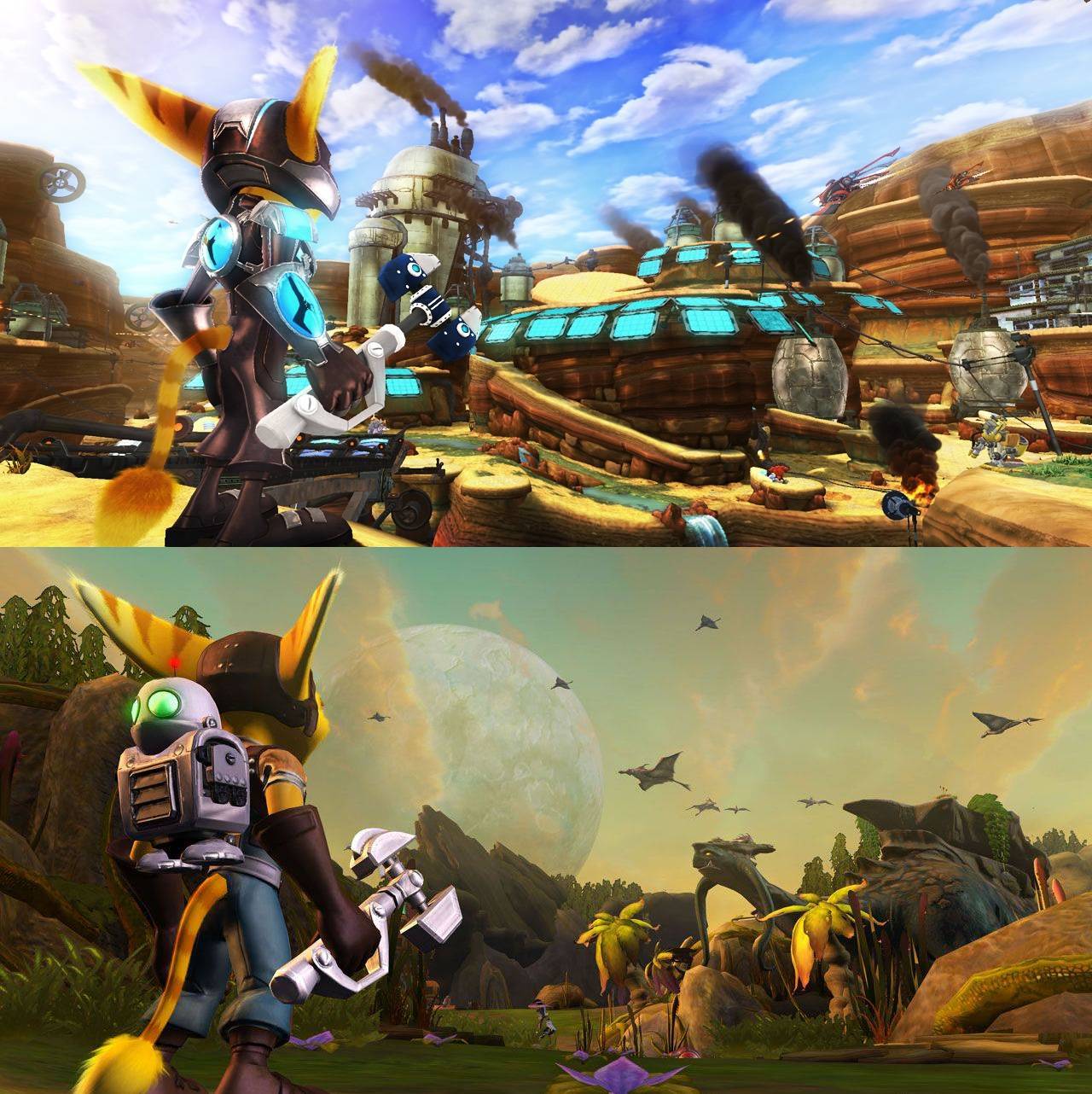
Films such as Wall-e and games like the Ratchet and Clank series are similar in style and concept to my idea, with their own unique take on the sci-fi genre. My idea takes the idea of the lone robot character into a vibrant alien world like those seen in the Ratchet and Clank games.
I will use 3DS Max for creating the elements of my idea in 3d, utilising Photoshop for the texture maps. For testing my assets in-game I will use the UDK Editor, to see how my creations work within various conditions.


Technical Specifications

Lead Character
A clunky old robot, based upon humanoid proportions. Exaggerated features that are made up of varying parts that are falling apart due to age. Dressed in wild west attire, wide brimmed hat and ragged poncho to mirror the desolate and mock western style surroundings.


Triangle Count: 8000 Tri's
1x1024 and 1x512 Diffuse texture map
1x1024 and 1x512 Normal Map
1x1024 and 1x512 Specular Map


Reference Imagery:

IG 88 ~Star Wars Saga
Clint Eastwood ~The Good, the Bad and The Ugly
Robot Pirates from Ratchet and Clank: Tools of Destruction

Non-Playable Character
Scavenger style drone robot, built in the appearance of a metal vulture: used by an old government to search out valuable scrap to re-use. Are hostile towards the main character, due to his parts being constantly replaced with the scrap parts they are programmed to search for.


Triangle Count: 5000 Tri's
1x1024 Diffuse texture map
1x1024 Normal Map
1x1024 Specular Map


Reference Imagery:

Scavenger and Vulture droids respectively from the Star Wars franchise

Vehicle
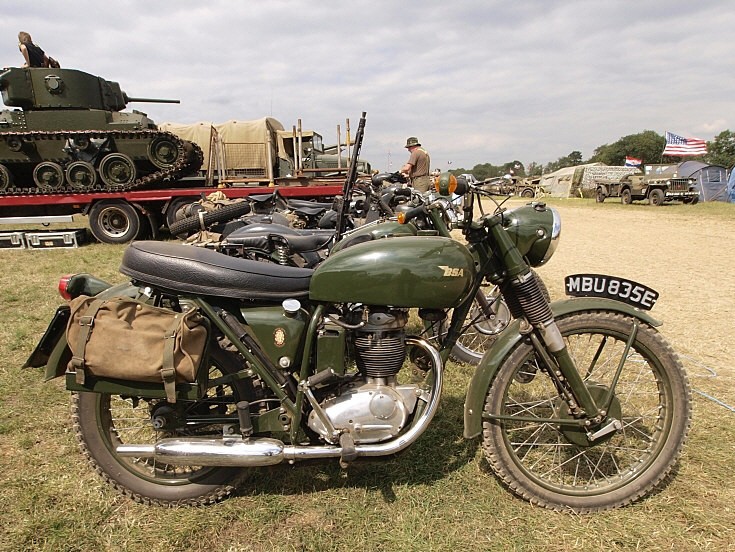
A rusty old hoverbike that has been scrapped together, much in the same aspect as the main character. Though futuristic, is still an inferior mode of transport compared to the rest of the worlds alternatives. Is used to traverse large open areas, and also to reach those areas not accessible by foot.


Triangle Count: 3500 Tri's
1x1024 Diffuse texture map
1x1024 Normal Map
1x1024 Specular Map


Reference Imagery:
Classic Motorcycle
Speeder Bike ~Star Wars

Environment
A majority of the areas or levels featured in this game will be large scale and open to explore at the players own pace, and will range from wild-west style ghost towns where old mechanical structures dot the landscape, to overgrown and abandoned forest reserves to bustling future metropolis'. The more populated areas of the game will be more restricted in terms of exploration, to save on memory and amount of intractable assets required to make.
The technical spec's for each games area will vary greatly, though they will feature assets that include overgrown ruined factories, various abandoned vehicles and crashed spacecraft, and other relics of and abandoned world the main character is part of. The opposite will also be included though, with new futuristic constructs and architecture in one of the game worlds few thriving cities. A smaller area that would feature as the game's early stage, would be at least around 15,000 tri's, with various assets with their own 1x512 diffuse, normal and specular maps. As you progress through the game the stages will be expansive, though because of this it means re-using the same assets wont be as obvious and will save on resources.
Finished assets will be manipulated into place using UDK.

Reference Imagery:

Old Wild West Ghost Town
Krell Canyon: From Ratchet and Clank: Tools of Destruction
Ruins from Enslaved: Odyssey to The West
Props and Scenery Objects

Weapons
A laser carbine, styled in the same fashion of an old fashioned rifle but with a cobbled together appearance to show it has been hand made from old materials. Various other weapons will become available throughout the game, though none will exceed the budget.


Triangle Count: 1000 Tri's
1x512 Diffuse texture map
1x512 Normal Map
1x512 Specular Map


Reference Imagery:

Various blaster type weapons from the Star Wars saga